
Key takeaways
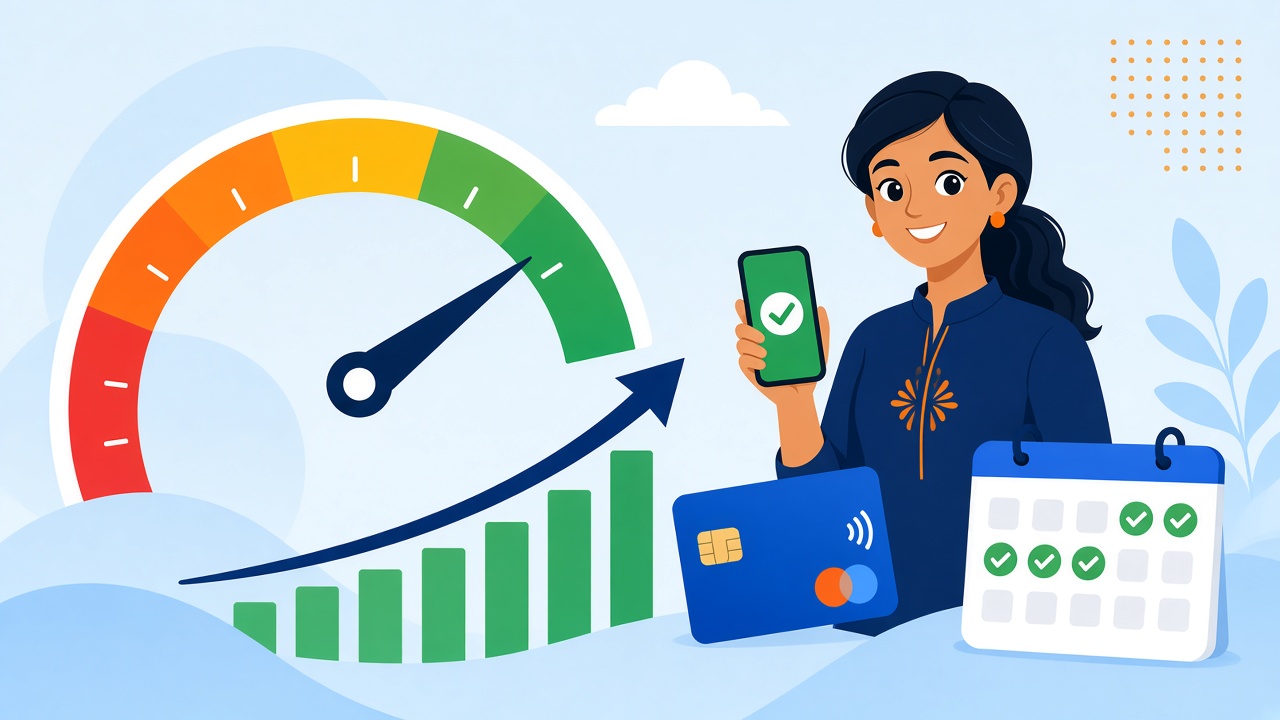
- CIBIL score is a 300–900 number summarising your loan and credit card repayment history; 750+ is considered good for fast loan approval.
- Lenders use CIBIL score for loan approval, interest rate pricing and credit limit — it is not the same as your salary or bank balance.
- Minimum CIBIL score for a personal loan is often 700+ at banks and 650+ at select NBFCs, but 750+ gets the lowest rates.
- Checking your own CIBIL score is free and is a soft enquiry — it does not reduce your score.
What is CIBIL score? It is India's most widely used credit score — a three-digit summary of how reliably you repay loans and credit cards. When you apply for a personal loan, home loan or credit card, the bank pulls your CIBIL score for loan approval before deciding yes or no, and how much interest to charge.
This guide explains the CIBIL score range, how scores affect loan approval and interest rates, minimum scores by product, and what to do if yours is low. Check your CIBIL score free on LoanLender (soft check). To raise a weak score, see how to improve CIBIL score.
What Is CIBIL Score (Meaning in Simple Terms)?
CIBIL (Credit Information Bureau (India) Limited), now TransUnion CIBIL, is an RBI-licensed credit bureau. It collects monthly data from banks and NBFCs about your loans, credit cards, repayments and enquiries, then generates a CIBIL score between 300 and 900. Higher scores mean lower credit risk.
India has four bureaus (CIBIL, Experian, Equifax, CRIF High Mark). Most lenders still refer to “CIBIL score” colloquially even when they pull another bureau’s report.
CIBIL Score Range: What Is a Good Score?
| Score | Rating | Typical loan approval impact |
|---|---|---|
| 750 – 900 | Excellent | Fast approval, lowest interest rates, higher loan amounts |
| 700 – 749 | Good | Approved by most banks; standard pricing |
| 650 – 699 | Fair | Limited lenders; higher personal loan rates |
| 550 – 649 | Poor | High rejection risk; secured loans or co-applicant advised |
| 300 – 549 | Very poor | Usually declined until score improves |
| NA / NH | No history | Thin file — start with secured card or small gold loan |
How Is CIBIL Score Calculated?
The exact formula is proprietary, but these factors drive most of the CIBIL score for loan approval decisions:
| Factor | Approx. weight | What lenders see |
|---|---|---|
| Payment history | ~30% | On-time vs delayed EMIs and card bills |
| Credit utilisation | ~25% | % of total card limit used |
| Credit age & mix | ~25% | Length of history; secured vs unsecured mix |
| New credit & enquiries | ~20% | Recent loan applications and new accounts |
Salary, savings account balance and debit card usage do not change your CIBIL score — though lenders check income separately during underwriting.
How CIBIL Score Affects Loan Approval
Your CIBIL score for loan approval works in three ways: (1) Gatekeeper — below a lender’s minimum, the application is auto-declined; (2) Pricing — higher scores get lower interest rates and fees; (3) Limit — stronger scores support higher loan amounts at the same income.
Minimum CIBIL score by loan type (indicative)
| Loan type | Preferred score | Often accepted |
|---|---|---|
| Personal loan | 750+ | 700+ (banks), 650+ (some NBFCs) |
| Home loan | 750+ | 700+ with stable income |
| Car loan | 720+ | 680+ |
| Credit card | 750+ | 700+ for many entry cards |
| Business loan | 700+ | 650+ with strong financials |
Two applicants with the same salary can receive different outcomes if their scores differ by 80 points — the lower score may face a 2–4% higher personal loan rate or a shorter approved tenure.
Example: CIBIL Score Effect on Personal Loan Interest
On a ₹5 lakh personal loan for 5 years, illustrative pricing might look like this:
| CIBIL band | Indicative rate | Approx. EMI | Total interest |
|---|---|---|---|
| 780+ | 10.5% p.a. | ₹10,747 | ₹1.45 lakh |
| 720 – 749 | 12.5% p.a. | ₹11,257 | ₹1.75 lakh |
| 680 – 699 | 16% p.a. | ₹12,159 | ₹2.30 lakh |
| 650 – 679 | 18%+ p.a. | ₹12,697+ | ₹2.62 lakh+ |
Improving from the 680 band to 780+ can save ₹85,000+ in interest on the same loan. Use the personal loan EMI calculator with different rates to model your case.
How to Check CIBIL Score Free Before Applying
- 1Use LoanLender's free credit score check — soft enquiry, unlimited checks.
- 2Review accounts, overdue amounts and enquiry history on the report.
- 3Dispute errors with the bureau if any loan is not yours or a closed account shows overdue.
- 4If score is low, follow how to improve CIBIL score for 3–6 months before a major loan application.
- 5When ready, check personal loan eligibility with a soft match to lenders.
Loan Options If Your CIBIL Score Is Low
- Secured loan: loan against property, gold or FD — collateral reduces score dependence.
- Co-applicant / guarantor: add a spouse or parent with a strong score.
- NBFC / fintech: some lenders specialise in 650–699 scores at higher rates — compare total cost carefully.
- Rebuild first: secured credit card + 6–12 months of perfect payments often beats repeated rejections.
Frequently Asked Questions
What is CIBIL score in India?
CIBIL score is a credit score between 300 and 900 calculated by TransUnion CIBIL from your loan and credit card repayment history reported by lenders. It helps banks decide loan approval and interest rates.
What CIBIL score is required for personal loan approval?
Most banks prefer a CIBIL score of 700 or above for personal loan approval, with 750+ qualifying for the lowest interest rates. Some NBFCs consider 650–699 at higher rates.
Does CIBIL score affect home loan approval?
Yes. Home loan approval and pricing depend heavily on CIBIL score along with property valuation and income. Scores below 700 may face stricter LTV limits or higher rates.
How often does CIBIL score update?
Lenders report to bureaus at least every 15 days under RBI rules, so your CIBIL score can change twice a month when you pay EMIs or use credit cards.
Will checking my CIBIL score reduce it?
No. Self-checks and soft enquiries through platforms like LoanLender do not reduce your CIBIL score. Only lender-initiated hard enquiries from formal applications affect it.
Can I get a loan with no CIBIL score (NA)?
If you have never taken credit, your report may show NA or NH (no history). Start with a secured credit card or a small gold loan, repay on time for 6–12 months, then apply for unsecured credit.
See your CIBIL score before you apply
Free soft check, personalised tips and eligibility matches — know your loan approval odds without hurting your score.
- #CIBIL Score
- #Loan Approval
- #Credit Report
- #Personal Loan
- #Home Loan
LoanLender Editorial Team
Personal Finance Research Desk
Our research desk tracks lender rate cards, RBI circulars and credit bureau updates every week to keep loan and credit score guides accurate for Indian borrowers.
Fact-checked by: LoanLender Credit Advisory Panel — Credit & Lending Specialists. Editorial policy
Disclaimer: Interest rates, fees and eligibility criteria mentioned are indicative and subject to change by the respective banks and NBFCs. Final loan approval and terms are decided solely by the lender. Please verify details in the lender's Key Fact Statement before applying.